How to Sleep After a Blow Out to Keep Your Hair Looking Fresh
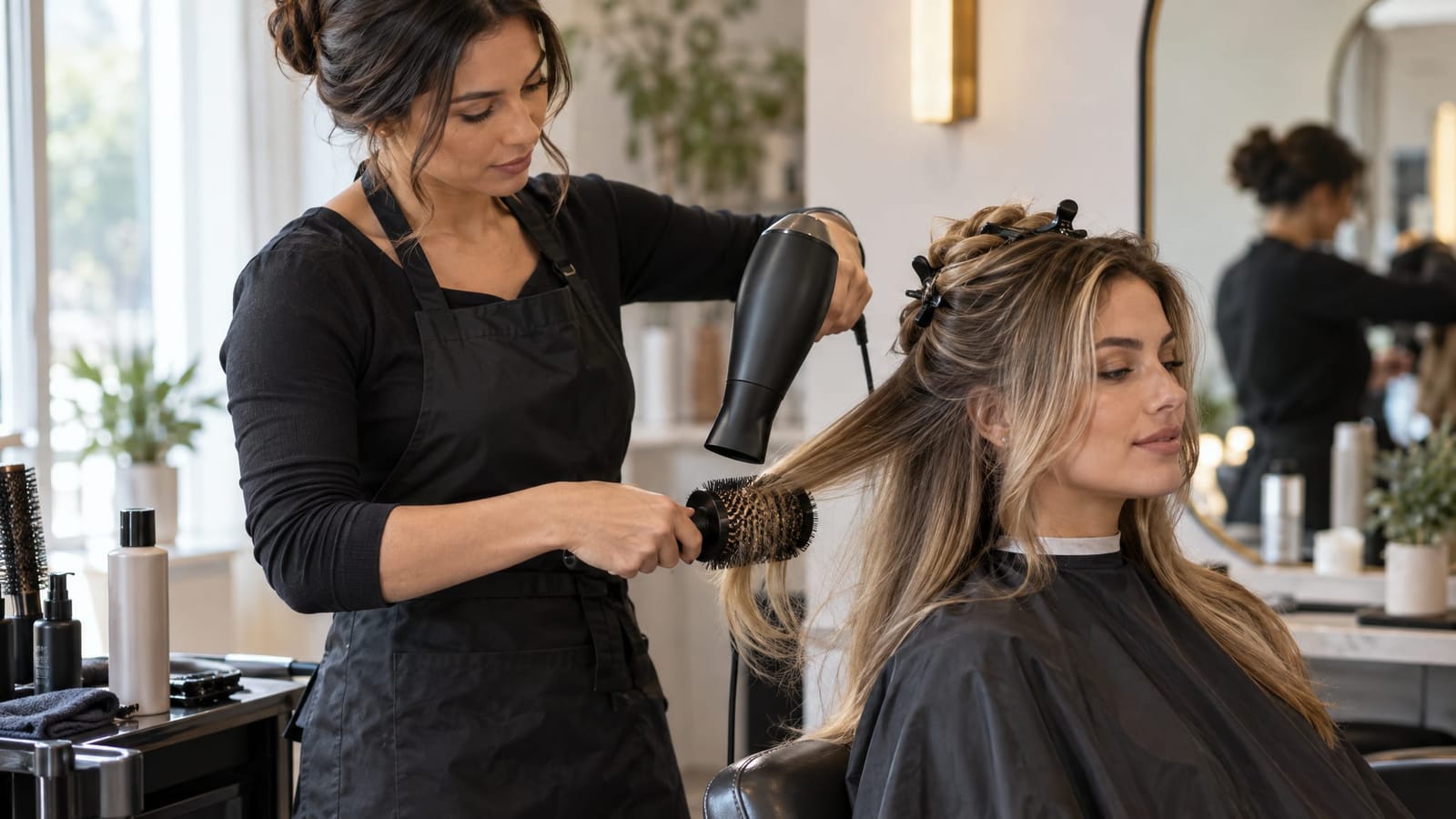
The best way to sleep after a Dominican blowout is to protect the shape without squeezing it flat. Start with completely dry, cooled hair, use a loose wrap for a sleek finish or a high, loose “pineapple” for longer waves, and add a satin or silk covering to limit rubbing against bedding.
At Kabelly Dominican Salon, we offer Wash & Blowout and Wash & Set services. Your nighttime routine depends on the finished look: smooth lengths need different support than full, curled ends. Here is how to choose your method and refresh your style the next morning.
Step 1: Let Your Hair Dry and Cool Before Covering It
Before wrapping your hair, check the roots, nape, and thicker sections for dampness. Hair that feels dry on the surface may still be damp underneath, especially after a shower or evening workout.
If you have just heat-styled your hair, let it cool before gathering it. Covering warm or damp hair can leave you with flattened areas or bends rather than the shape you intended.
- Keep your hair away from shower spray and bathroom steam.
- Skip bedtime misting when your goal is to preserve a stretched, smooth finish.
- Gently separate any tangles before wrapping, working from the ends upward rather than pulling through them.
Step 2: Choose a Wrap That Matches Your Finish
A bedtime style should hold your hair loosely in its existing shape. If securing it requires pulling hard or repeatedly brushing out the finish, choose another method.
For sleek lengths: Try a flat wrap
A flat wrap lays the hair around your head rather than gathering it into a ponytail. It is useful when smoothness matters more than preserving lift or large curls.
- Start at your usual part and choose one direction to wrap.
- Using your hands or a soft brush, guide manageable sections around your head, following its curve.
- Lay the lengths smoothly against your head, keeping the ends flat rather than folding them underneath.
- If needed, use smooth clips temporarily to hold sections while you position a satin or silk scarf.
- Secure the scarf comfortably, then slide out the temporary clips without disturbing the wrap.
A flat wrap may soften curled ends or reduce volume. For a blowout with plenty of bounce, a looser method is often a better match. If your hair will not reach comfortably around your head, do not force it.
For longer waves: Try a loose pineapple
A pineapple gathers hair high on the head so the lengths sit above the area resting on your pillow. It can help keep longer waves from being pressed beneath you, though a snug tie may leave a crease.
- Use your fingers to lift the hair toward the top of your head without brushing through the waves.
- Gather it with a soft, fabric-covered scrunchie, keeping the hold loose rather than repeatedly looping it tight.
- Leave the lengths free instead of twisting them into a tight bun.
- If adding a bonnet, choose one with enough room for the ends to rest without being crushed.
For shorter layers that cannot reach the top comfortably, leave them loose inside a roomy bonnet. A pineapple is not worth stretching or pulling sections just to make them fit.
Step 3: Choose Between a Scarf, Bonnet, and Pillowcase
These options serve different purposes. A smooth sleeping surface reduces rubbing, while a covering also helps contain the hair.
- Satin or silk scarf: Best suited to holding a flat wrap in place. Keep the knot away from the area you sleep on and avoid tightening it to compensate for slipping.
- Roomy bonnet: Useful for loose waves, curled ends, and shorter styles. Look for enough space to hold the hairstyle without compressing it and an edge that rests comfortably.
- Satin or silk pillowcase: A practical choice if you dislike head coverings. It provides a smooth surface but does not keep lengths arranged or prevent them from being flattened beneath you.
A bonnet with a smooth pillowcase underneath offers a backup if the bonnet slips off. More layers are not automatically better, though. If a scarf-and-bonnet combination feels hot or bulky, simplify it.
Step 4: Check Comfort Before You Settle In
Lie down briefly and check where your hair, scrunchie, and scarf knot rest. Move anything that presses against your head or traps the ends beneath your neck.
Keep your sleeping space comfortably cool, and avoid pulling bedding over your head. Warmth and perspiration can make it harder to maintain a smooth finish. During humid Maryland weather, protecting your hair from moisture matters alongside choosing the right wrap.
You do not need to stay motionless all night. A comfortable setup that accommodates your normal sleeping position is more practical than a complicated arrangement you cannot tolerate.
Step 5: Refresh the Shape Gently in the Morning
- Release everything slowly. Remove the scarf or bonnet and loosen the scrunchie without dragging it through the ends.
- Let the hair fall into place. Give gathered lengths a moment to settle before deciding what needs fixing.
- Match your tool to the finish. Gently brush a sleek wrap into position. For waves, separate sections with your fingers to avoid brushing away their shape.
- Refresh only what needs attention. Lift flattened roots with your fingers and smooth individual flyaways rather than immediately restyling everything.
If a small section needs heat, follow your heat protectant’s directions and touch up that area on dry hair instead of reheating the entire style. Avoid adding water to smooth a dent if you want to maintain the blowout’s stretched finish. When humidity has substantially changed the style, a loose updo may be simpler than repeated touch-ups.
Frequently Asked Questions
Do I need to apply oil before bed every night?
No. Add product only when the hair needs it, rather than making it an automatic step. Too much oil or serum can weigh down a blowout. If you use a finishing product, follow its directions and focus on the areas that need smoothing.
What if my bonnet keeps slipping off?
Try a different fit or adjustable design rather than making the edge increasingly tight. Position it so your hair is fully contained, and use a satin or silk pillowcase as a backup.
How many nights will this routine preserve my blowout?
Your texture, the finished style, humidity, workouts, and sleep habits all affect how it holds. Nighttime protection helps maintain the shape, but it does not make a blowout moisture-proof or replace your regular cleansing routine.
Keep the Routine Simple
Match the method to the finish: wrap sleek lengths, gather longer waves loosely, and give curled ends room. Dry hair, a comfortable covering, and a light morning refresh are more useful than tight wrapping or layers of extra product.