Haircuts for Natural Hair: What to Ask For and What to Expect at a Salon
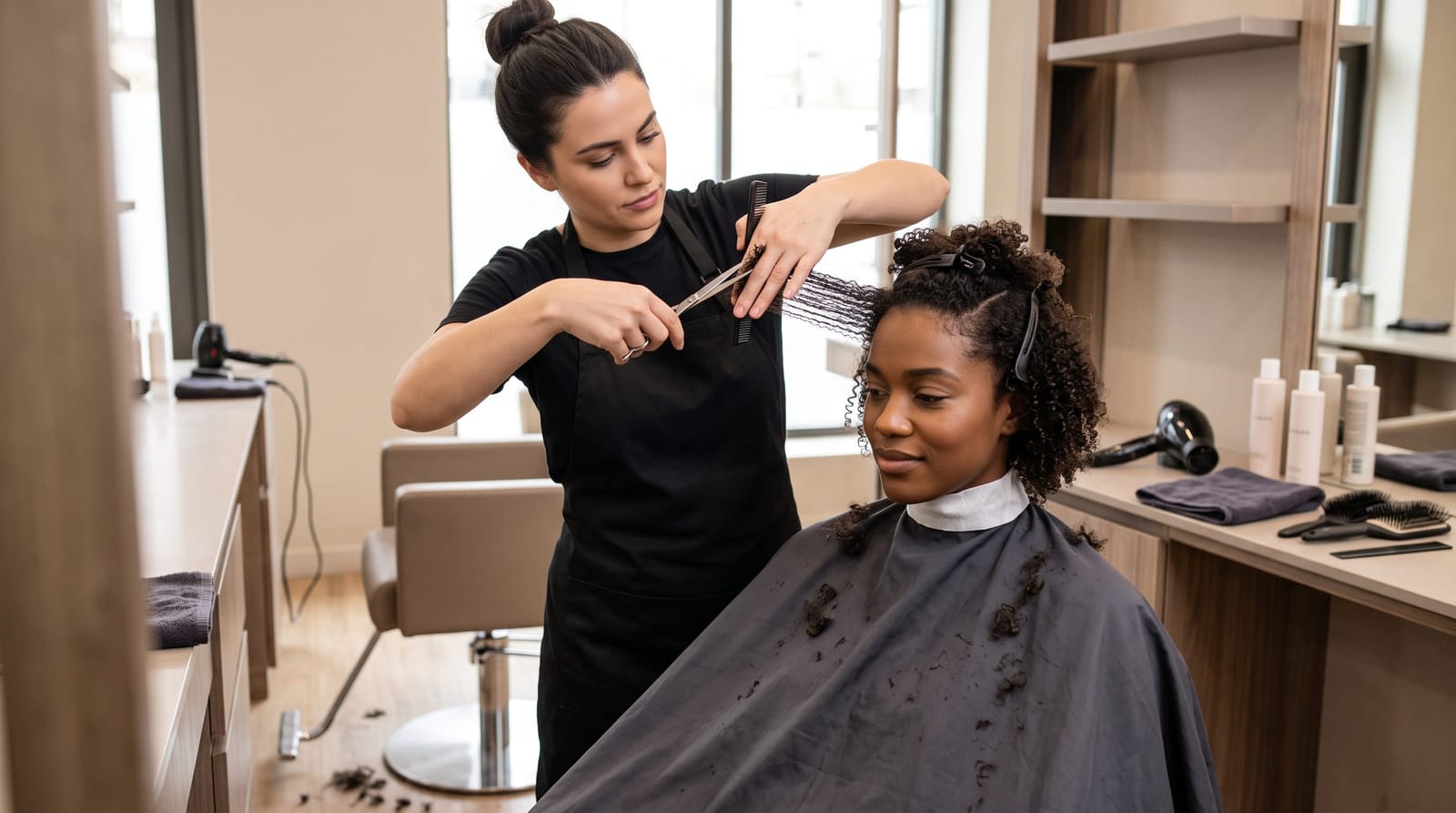
The most useful thing to ask for when planning a haircut for natural hair is a shape that works in the way you actually wear it. Tell the stylist whether your everyday look is a wash-and-go, twist-out, stretched style, or blowout, then discuss the finished length before cutting begins. Cutting dry curls, wet hair, or stretched hair offers different views of your hair; none is automatically the best choice for everyone.
Whether you are maintaining your natural texture or growing out chemically straightened lengths, a clear consultation helps connect your preferred shape with your everyday routine. Here is how to describe your goals, compare cutting approaches, and understand what happens in the chair.
Start With the Difference Between a Haircut and a Hairstyle
A haircut changes your hair’s underlying length and shape. A hairstyle arranges that hair into a particular look. Box braids, cornrows, twists, and buns are styles, not haircuts, even though inspiration galleries often show them alongside tapered cuts and curly bobs.
That distinction matters when choosing a reference photo. You may love the definition of a twist-out without wanting the shorter layers underneath it. Or you may admire a braided bob without wanting your natural hair cut to bob length. Point out what appeals to you, then discuss which parts come from the cut and which come from styling.
Choose a starting shape, not just a haircut name
- Rounded shape: A fuller outline that can emphasize volume around the head. Discuss where you want the most fullness.
- Tapered cut: Shorter sides and back with more length on top. Decide how close you want the sides and how much styling flexibility you want to keep.
- Curly bob: A defined shorter outline. Show where you want it to sit when your curls are dry, rather than only when stretched.
- Longer layered shape: Different lengths arranged to change how volume falls while retaining a longer overall look.
A face-framing detail can personalize any of these options. The haircut for face shape guide explores those choices, but your preferred silhouette and styling habits matter more than following a rigid face-shape rule.
Prepare for the Consultation Before Your Appointment
When arranging a natural-hair appointment in Clinton, describe the result you want. “Haircut” alone may not explain whether you want a curl-focused shape, a trim on stretched hair, or a cut finished with a blowout.
Arrival instructions vary with the cutting method. A stylist planning to assess dry curls may want to see your usual curl pattern, while another may plan to wash and prepare your hair first. Ask how to arrive rather than assuming you need freshly straightened, heavily styled, or completely product-free hair.
Bring a small, useful set of references
Choose a few photographs with different views of the shape you like. Images showing a similar texture, density, and starting length can make the discussion easier, but they are references, not promises of an identical result.
Point out the specific features you want: “I like the fuller crown,” “I want this open neckline,” or “I like the length, but not the bangs.” A photo of your own hair on a day you liked it is also helpful because it shows what already works for you.
Describe your ordinary routine
Explain how you wear your hair most days, how often you switch between curly and stretched looks, and what styling effort feels realistic. Mention practical needs such as pulling your hair into a puff, keeping the front out of your face, or preserving enough length for twists.
If extensions are part of your routine, clarify whether the appointment is for your own hair or for shaping the installed extensions. Those are different requests. This guide to getting a haircut with extensions in covers the questions to raise before an appointment.
Explain Your Desired Cut in Concrete Terms
Words such as “trim,” “layers,” and “manageable” can mean different things to different people. Translate each one into a result the stylist can picture.
- Instead of “just a trim”: “Keeping length is my priority. Please show me the amount you suggest removing before you start.”
- Instead of “less bulk”: “I want less fullness at the sides, but I want to keep volume on top.”
- Instead of “shoulder length”: “I want the finished curls to sit near my shoulders when dry.”
- Instead of “easy to maintain”: “I usually wear a wash-and-go and do not want a cut that needs daily heat styling.”
Agree on the shortest areas, too
Overall length is only part of the decision. Ask where the shortest layer, face-framing section, or fringe will sit. Those details affect whether you can tuck the front back, gather your hair, or wear your usual styles.
If you want a rounded shape, you might say: “I wear my curls loose during the week and in a puff on busy mornings. I want more shape around my face, but I want the front to reach the puff.” That gives the stylist a clearer starting point than “give me layers.”
For help organizing your priorities, the first-time client’s guide to what to tell your stylist for a haircut offers more ways to explain your preferences.
Understand Dry, Wet, and Stretched Cutting
Natural hair can appear different when wet, stretched, or fully dry. Shrinkage, the difference between its extended length and how it sits in its natural curl pattern, is one reason to discuss the finished look rather than judging length only during cutting.
The terms can overlap: stretched hair may also be cut while dry. What matters is how the hair is prepared and how that approach relates to the finish you usually wear.
Cutting dry curls: seeing the shape as it sits
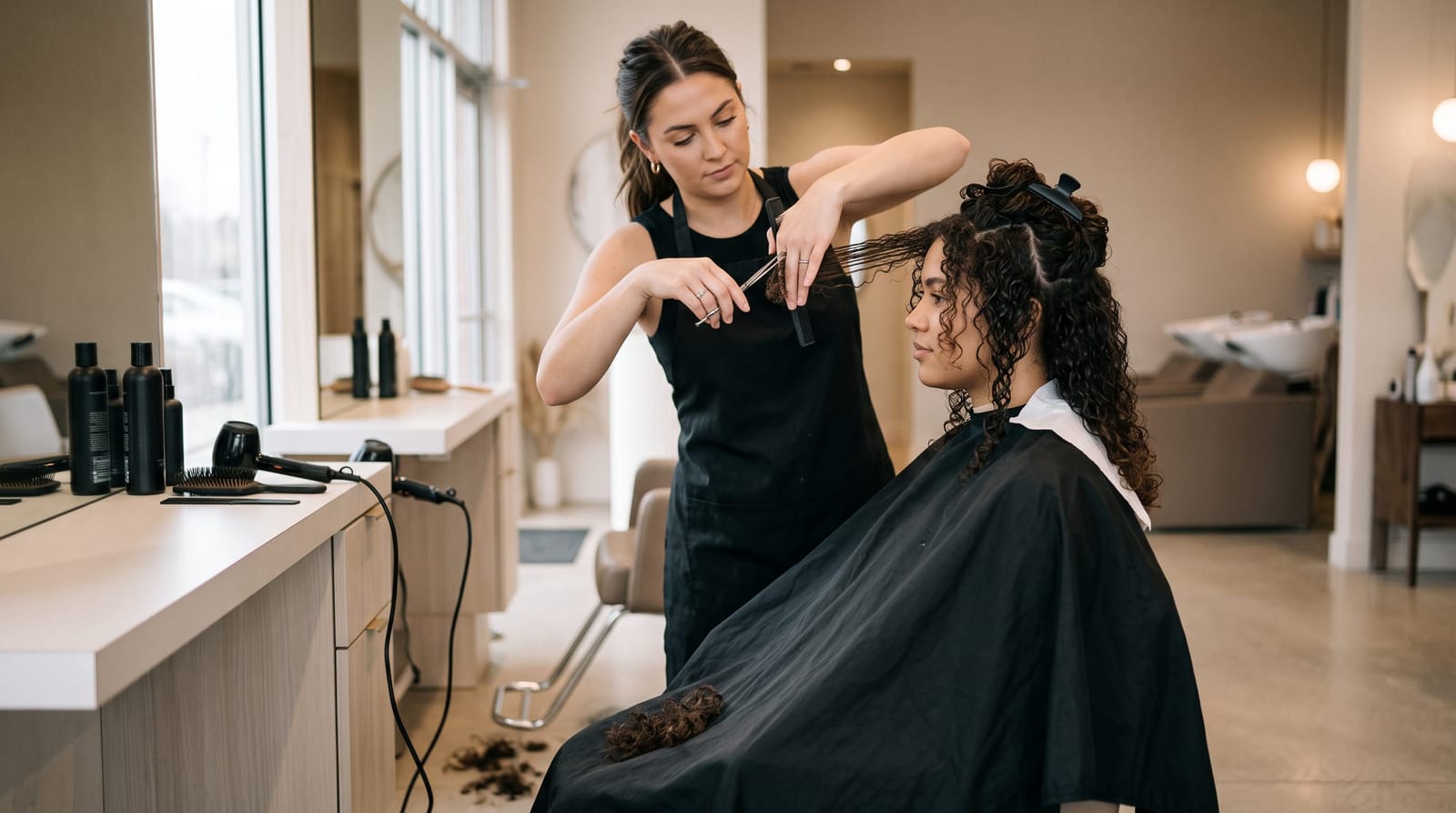
Cutting dry hair in its natural pattern lets the stylist assess the visible outline, curl groupings, and areas of fullness. This can be useful when your main goal is a shape you wear curly.
The limitation is that a dry assessment reflects how the hair is arranged that day. A stretched twist-out, flattened section, or different part can change the apparent shape. Explain how your appointment-day hair compares with your usual look.
Wet cutting: organizing length and sections
Wet cutting allows the stylist to work through organized sections and establish lengths and layers. It can be part of a natural-hair cut, particularly when followed by an assessment of the finished texture.
Wet hair alone does not show exactly where every curl will settle once dry. Ask how the stylist accounts for shrinkage and how the dry result will be checked.
Stretched cutting: viewing a smoother outline
Some stylists cut after stretching or blow-drying the hair. This provides a different view of the ends and overall outline, which may suit someone who regularly wears stretched styles.
A balanced stretched outline does not necessarily look identical when the hair returns to its curl pattern. If you alternate between a blowout and natural curls, explain that before the cut. Discuss what compromises may be needed and how both looks will be considered.
A stylist may combine approaches. The useful question is not “Which technique is always best?” but “Why does this approach fit the way I wear my hair?”
What to Expect at a Dominican Salon
At Kabelly Dominican Salon in Clinton, we offer haircuts, trims, Wash & Set, and Wash & Blowout services. When planning a haircut, separate the shape you want from the finish you want that day. If you enjoy a blowout but usually wear your hair curly, both looks belong in the consultation.
Examples of a stylist’s work are most useful when they show a similar texture and density in the finish you plan to wear. Blowout photographs show a stretched result; curly photographs help you assess how a shape sits in its natural texture.
Before the appointment, clarify:
- Whether the cutting approach will use your natural curl pattern, wet hair, stretched hair, or a combination.
- Whether heat styling is part of the planned service or an optional finish.
- Which finish is planned and how it relates to your everyday styling.
- How the cut will account for areas with different curl patterns.
A useful consultation connects the cutting method to your desired result and makes the tradeoffs clear before any length is removed.
Adjust the Plan if You Are Transitioning to Natural Hair
If you are growing out chemically straightened hair, explain whether you want to preserve length through gradual trims or remove the straightened portions in a shorter cut. A haircut can remove those lengths; it does not turn them into natural curls.
Ask the stylist to show where the different textures meet and discuss what each cutting option would leave you with. Keeping more length may mean continuing to style two textures together. A shorter cut changes the silhouette sooner but may remove the length needed for familiar updos.
There is no single correct transition timetable. The useful plan reflects your comfort with shorter hair and how you intend to style the remaining lengths.
Review the Finished Shape and Your Next Steps
Before leaving, look at the front, sides, and back, and discuss the result in the finish you received. If the hair is stretched, ask what differences to expect when it is curly rather than treating the stretched shape as a preview of an identical wash-and-go.
Ask which styling steps create the finished look and which are optional. Also discuss what signals it is time for reshaping: perhaps the fringe becomes inconvenient, the tapered outline grows fuller than you prefer, or the layers no longer sit as you like. A maintenance plan can be based on the cut rather than a universal calendar.
If density is your main concern, explore haircuts for thick curly hair before deciding that going shorter is the only answer. Where length and volume sit can matter as much as how much hair is removed.
After your first wash and style at home, note how the shape works with your routine. A photo of the result, along with any sections you find difficult to style or gather back, gives you something specific to discuss at your next trim.