What Happens to Your Natural Hair Under Glue Extensions?

Glue-in hair extensions can be absolutely gorgeous: fuller, longer, and beautifully blended when done well. But a question that comes up often, and rightfully so, is: what's actually happening to your natural hair underneath? Understanding the signs of chemical hair damage and tension-related stress is one of the most important parts of wearing extensions responsibly. This post takes a closer look at what goes on at the scalp and strand level during extended glue extension wear, and how a professional approach makes all the difference.
How Glue Extensions Interact With Your Natural Hair
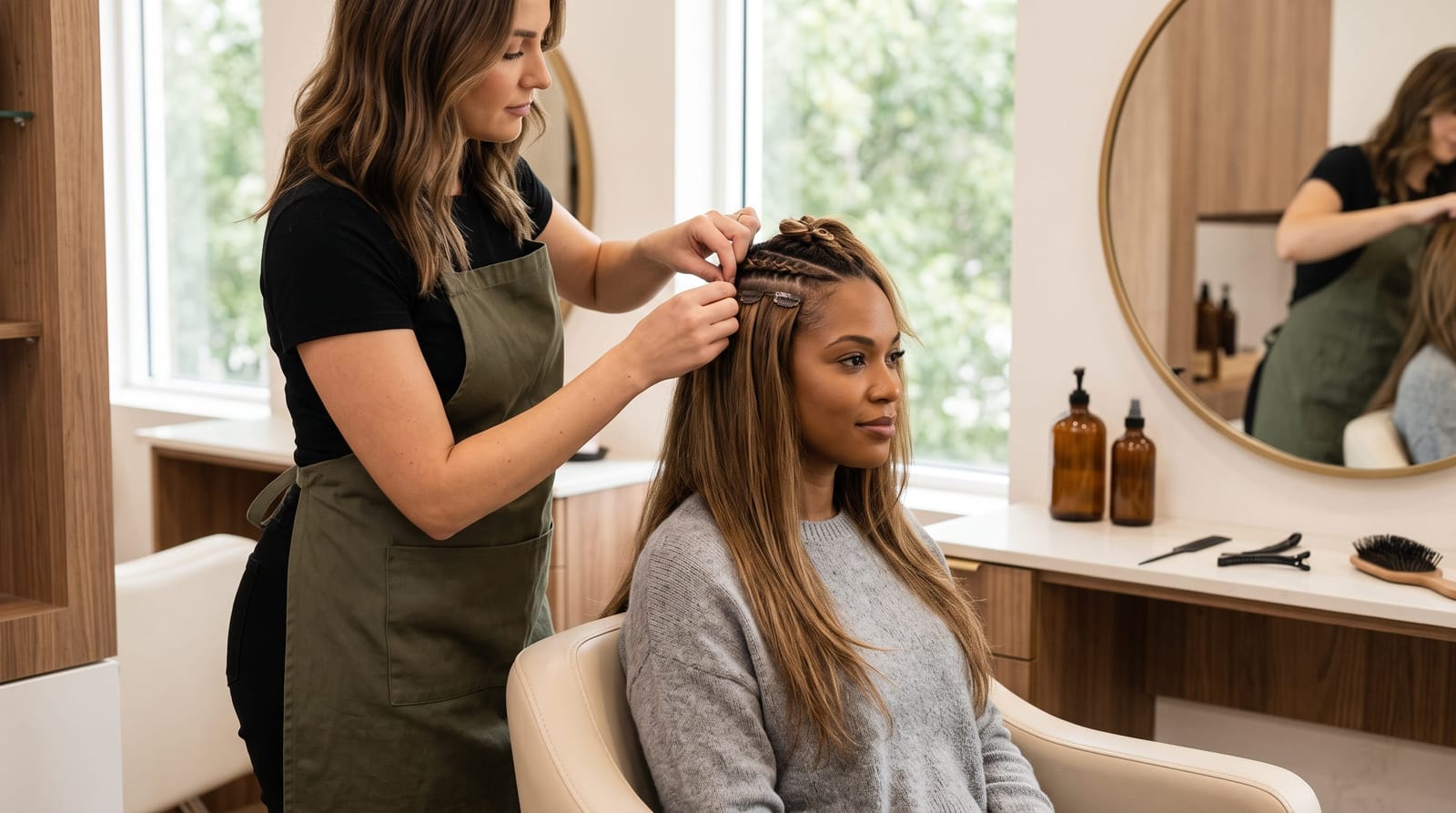
Glue-in extensions use a keratin-based bonding adhesive that attaches directly to small sections of your natural hair, typically near the root. When applied correctly by a trained stylist, the bond sits at a safe distance from the scalp, usually about a quarter inch, and does not pull unevenly on the strand. The weight is distributed across multiple bonds rather than concentrated in one area.
The challenge arises when extensions are applied improperly, worn too long without maintenance, or removed without professional care. In those cases, the adhesive can migrate closer to the scalp, creating a situation where everyday movement, brushing, sleeping, pulling hair into a style, places repeated stress on the same section of hair. Over time, this consistent tension can weaken the hair shaft at the bond attachment point.
Studies on chemical and mechanical hair stress show that the outermost layer of the hair strand, the cuticle, is especially vulnerable to repeated friction and pulling. Once the cuticle is disrupted, moisture escapes more easily, and the hair becomes more prone to breakage. This is why the method of application matters just as much as the adhesive itself.
The Most Common Chemical Hair Damage Signs to Watch For
Whether you're currently wearing glue extensions or considering them, knowing the early chemical hair damage signs helps you stay ahead of any issues. Research shows that hair undergoing repeated chemical or mechanical stress displays a recognizable pattern of changes, and glue extension wear, especially without proper maintenance, can trigger several of these.
- Dryness and brittleness: Hair near the bonds may feel dry or rough to the touch. This is often one of the first chemical hair damage signs, occurring because the cuticle layer has been disrupted and is no longer sealing in moisture effectively.
- Increased shedding at the bond site: Some shedding is normal: the average person loses between 50 and 100 strands of hair per day. However, if you're noticing concentrated breakage near the root where bonds are attached, that's worth paying attention to.
- Uneven texture: Natural hair that has been under tension for several weeks may feel different in texture compared to hair further from the bonds: slightly rougher, less smooth, or harder to detangle.
- Split ends and dullness: These are classic chemical hair damage signs that appear when the strand's integrity has been compromised, often alongside a noticeable loss of shine.
- Excessive tangling when wet: Lifted cuticles catch on each other, which is why post-extension hair that hasn't been properly conditioned tends to tangle far more during washing.
Catching these chemical hair damage signs early, ideally during a maintenance appointment, is what separates a great extension experience from one that leaves your hair needing significant recovery time.
Scalp Health During Extended Glue Extension Wear
The scalp doesn't get enough attention in extension conversations, but it's just as important as the strands themselves. When extension bonds sit close to the scalp for weeks at a time, airflow to the scalp is reduced and product buildup can accumulate more quickly than usual. This creates an environment where the scalp may become dry, flaky, or irritated: particularly if proper cleansing isn't maintained.
Tension at the root is another key concern. When extensions are too heavy for the amount of natural hair they're attached to, or when too many bonds are placed in one section, the follicle experiences ongoing stress. Research in hair care consistently shows that prolonged tension on hair follicles, over weeks rather than hours, can lead to follicle fatigue, which presents as thinning along the hairline or at the temples. This is particularly common when extensions are worn for longer than the recommended 6 to 8 week maintenance window.
Keeping the scalp clean and moisturized during extension wear isn't optional: it's essential. A lightweight, sulfate-free shampoo applied gently at the scalp (not rubbed aggressively through the length of the hair) helps prevent buildup without disturbing the bonds prematurely. Skipping the conditioner is one of the most common habits that accelerates chemical hair damage signs during extension wear, so maintaining a conditioning routine on the mid-lengths and ends is equally important.
Why Professional Application and Removal Are Non-Negotiable
One of the most preventable causes of chemical hair damage signs during glue extension wear is improper removal. When bonds are pulled out, picked apart, or removed with excessive force, the adhesive takes natural hair strands with it. Studies on hair shaft integrity show that mechanical damage during removal can cause immediate breakage as well as long-term structural weakening of the affected strands.
At Kabelly Salon, the approach to both application and removal is built around your natural hair's health. During application, stylist attention goes into selecting the right bond size for your hair density, placing bonds at a safe distance from the scalp, and ensuring weight is evenly distributed. During removal, a professional bond remover solution is used to gently dissolve the adhesive before any physical separation: meaning your natural hair is never forced apart from the bond.
This process takes more time than a rushed removal, but it's the difference between walking out with healthy natural hair and walking out with visible breakage. If you're also wondering whether your current hair condition is a good candidate for extensions, exploring whether extensions are suitable for short or damaged hair is a great starting point before booking your appointment.
How to Protect Your Natural Hair While Wearing Glue Extensions
The good news is that glue extensions and healthy natural hair are entirely compatible, with the right habits in place. Here's what makes the biggest difference during the wear period:
- Schedule maintenance appointments every 6 to 8 weeks. This is not just about aesthetics: it's the window during which bonds should be checked, repositioned if needed, and any early chemical hair damage signs should be addressed before they progress.
- Sleep on a silk or satin pillowcase. Cotton fabric creates friction against the bonds overnight, which accelerates cuticle lifting on the natural hair strands closest to the bond.
- Never skip deep conditioning. Conditioning protective agents have been shown in hair care research to significantly minimize damage by restoring moisture to the cuticle layer. A targeted deep conditioning treatment after extension removal is especially important for restoring hydration and smoothness to the natural hair underneath.
- Be gentle when detangling. Always start from the ends and work upward, using a wide-tooth comb or a brush designed for extension wear. Aggressive brushing near the bonds is one of the fastest ways to introduce mechanical stress to the hair shaft.
- Avoid excessive heat near the bonds. High heat applied directly to the adhesive can soften it and cause bonds to slip, which not only shortens the life of the extension but puts added stress on the section of natural hair attached to it.
Frequently Asked Questions
How do I know if my natural hair is being damaged by glue extensions?
The most noticeable chemical hair damage signs include dryness at the root, breakage near the bond attachment points, increased tangling when wet, and a change in texture at the sections where extensions are applied. If you're seeing these signs between appointments, reach out to your stylist before your next scheduled visit rather than waiting.
How long is too long to wear glue extensions without a maintenance appointment?
Most professional stylists recommend a maintenance check every 6 to 8 weeks. Wearing glue extensions beyond this window increases the risk of bond migration (the bond shifting closer to the scalp), matting at the root, and concentrated tension that can stress the follicle. The longer extensions are left unattended, the more involved the removal process becomes.
Can glue extensions cause permanent hair damage?
When applied and removed professionally, glue extensions should not cause permanent damage. The risk of lasting effects, such as thinning along the hairline, typically occurs when extensions are worn too long, applied incorrectly, or removed with excessive force. Professional oversight at every stage of the process is the most effective way to protect your natural hair.
What should I do for my hair immediately after glue extensions are removed?
After removal, the natural hair benefits greatly from a deep conditioning treatment designed to restore moisture, smooth the cuticle, and address any dryness or brittleness that built up during the wear period. Your stylist can assess the condition of your hair post-removal and recommend the most appropriate treatment for what your strands need.
The Bottom Line
Understanding what happens to your natural hair during glue extension wear, and recognizing the chemical hair damage signs that signal it's time to pay attention, is part of wearing extensions responsibly. Glue extensions can be a beautiful, confidence-boosting option when they're applied with care, maintained on schedule, and removed properly. At Kabelly Salon, protecting your natural hair is just as much a priority as the final style itself. For anyone in the DMV area navigating extension choices, decisions, and maintenance, this is the kind of expertise that makes all the difference.