Styling Options and Finishing Techniques
When you think about professional hair styling options, the cut is only the beginning. What happens after the scissors stop is where your hair truly comes alive. At a Dominican salon, finishing techniques and styling choices are treated as an art form: one that has been refined over decades of working with diverse hair textures and curl patterns.
This post is part of our broader guide to professional women's haircuts, where we explore everything from cut selection to long-term style maintenance. Here, we go deep on what happens after your cut: the blowout methods, the finishing products, the heat tools, and the at-home routines that keep your style looking salon-fresh all week long.
Whether you are a first-time Dominican salon client or a longtime regular, understanding your styling options helps you get more value from every visit.
Why Finishing Techniques Matter as Much as the Cut Itself
A well-executed cut sets the foundation. But finishing is what determines how your style actually behaves: how it moves, how it holds, and how long it lasts. Studies from professional cosmetology associations show that clients who receive proper finishing services retain their style shape up to 40% longer than those who skip this step.
Dominican salons have built a global reputation for their finishing work. The traditional Dominican blowout, for example, is known for delivering results that last three to seven days even on high-porosity or thick hair. That longevity comes from a specific combination of:
- Sectioning technique that ensures even heat distribution
- Tension-based drying that smooths the cuticle layer
- Finishing products applied in a precise sequence
- Cool air used to seal the hair shaft at the end
Understanding these steps means you can communicate clearly with your stylist about what you want, and recognize quality work when you receive it.
The Core Professional Hair Styling Options Available After Your Cut
Not all finishing services are the same. The right option depends on your hair texture, your lifestyle, and how much time you have for daily maintenance. Here is a breakdown of the most popular professional hair styling options offered at Dominican salons:
The Classic Dominican Blowout
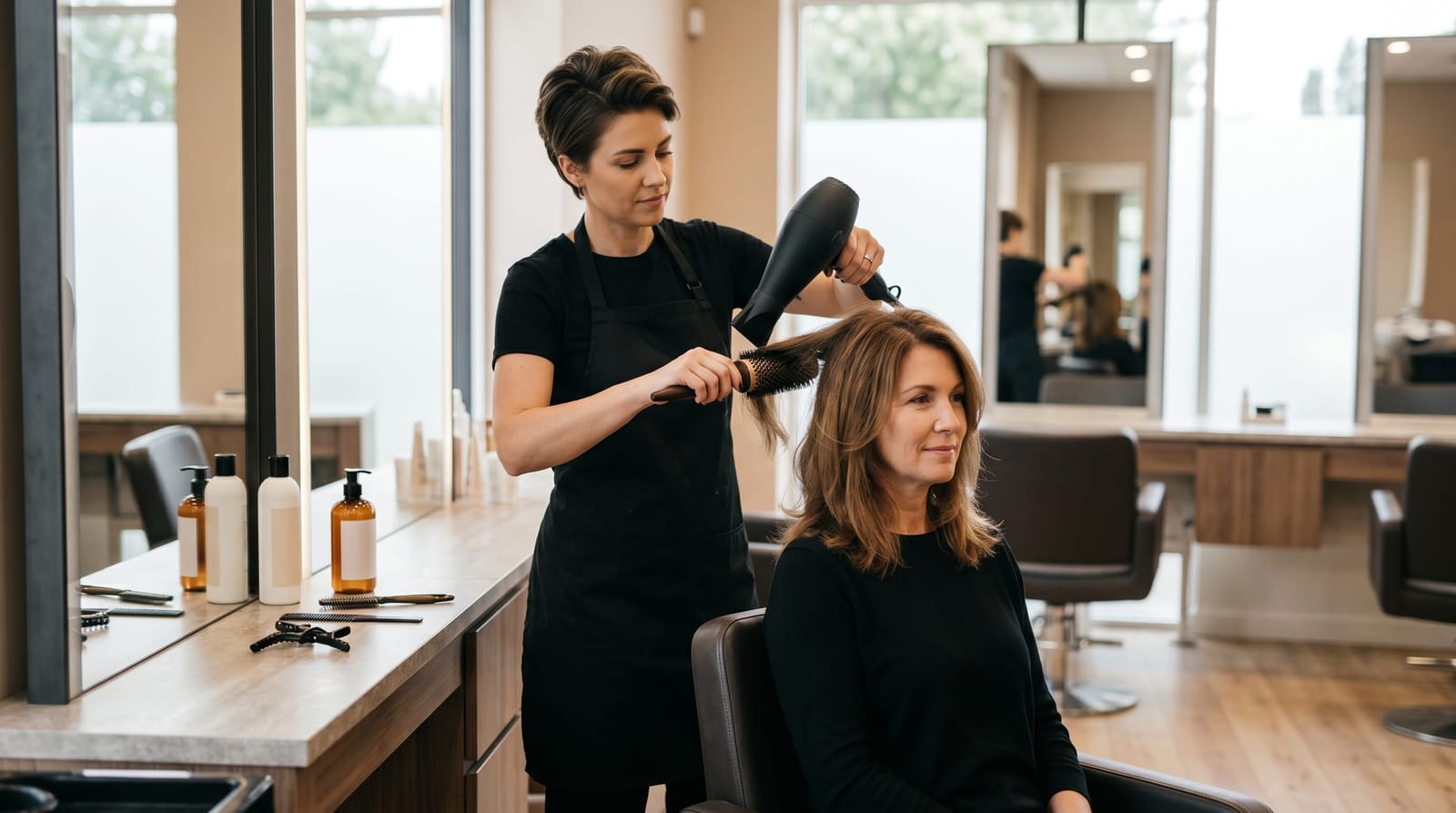
This is the signature service. Using a round brush and a high-velocity dryer, the stylist stretches and smooths the hair while drying it. The result is:
- High shine with minimal frizz
- Volume at the root with smooth mid-lengths and ends
- A style that can last four to seven days with proper wrapping at night
This technique works especially well on hair that is Type 2 through Type 4 and is a top choice for clients who want versatility between visits.
Wrap Style
The wrap is a sleek, smooth finish where the hair is combed and wrapped around the head during drying. It creates a flat, polished look with exceptional shine. Many clients use this style as a base: wearing it wrapped overnight and then opening it the next morning for a voluminous, bouncy result.
Roller Set
Rollers, whether wet set or used with heat, create defined waves and curls without direct heat on individual strands. This is a gentler option for clients who are managing heat damage or transitioning from chemical services. A roller set combined with a hooded dryer session typically takes 45 to 60 minutes and delivers long-lasting curl definition.
Silk Press
For natural hair clients, the silk press offers straight results using only heat: no chemicals. It involves a flat iron pass after a blowout to achieve a pin-straight finish with movement. This option is detailed further in our guide to haircuts for natural hair, where we also cover how cuts can be designed to complement this finish.
Finishing Products: What Goes Into a Long-Lasting Style
Product selection is one of the most underestimated parts of professional styling. The average Dominican salon stylist uses between three and six products in a single finishing session. Each one plays a specific role in the final result. Here is what you should know:
Heat Protectants
This is non-negotiable. A good heat protectant creates a barrier between the hair shaft and temperatures that can reach 400°F or higher. Look for products that list ingredients like:
- Dimethicone (creates a protective coating)
- Cyclomethicone (lightweight, reduces frizz)
- Hydrolyzed keratin (strengthens while protecting)
Smoothing Creams and Serums
Applied before or during the blowout, these products add slip to the hair and help the brush glide without snagging. They also contribute to the smooth, reflective finish that Dominican blowouts are known for. Serums applied after drying add a final layer of shine.
Hold Products
Depending on the style, your stylist may finish with a light hairspray, a pomade, or an edge control product. These serve different purposes:
- Hairspray: Best for volume and body styles that need to hold their shape
- Pomade: Ideal for sleek, smooth styles with definition
- Edge control: Used to lay baby hairs and smooth the perimeter
Ask your stylist what products they use. Many salons carry retail versions of their professional products, which makes it much easier to maintain haircut style home between visits.
Heat Tools: Understanding What Your Stylist Is Using and Why
Professional hair styling options rely on specific tools that deliver results home tools often cannot replicate. Here is a quick guide to the most common ones used in salon finishing:
- Professional blow dryers: Operate at 1800 to 2000 watts. This is significantly more powerful than most consumer models, which average 1200 to 1500 watts. More power means faster drying and less heat exposure over time.
- Round brushes: Used in various barrel sizes depending on the desired curl or wave. Larger barrels (2 to 3 inches) create body and volume; smaller barrels (1 to 1.5 inches) create tighter curl definition.
- Flat irons: High-quality salon flat irons heat evenly across the plate, preventing hot spots that cause damage. Titanium plates are faster; ceramic plates are more consistent.
- Hooded dryers: Used for roller sets and deep conditioning treatments. Gentle, diffused heat that protects the hair while ensuring even drying.
Understanding your stylist's tools also helps you make smarter decisions when purchasing tools for home use. A quality professional-grade blow dryer can cost between $80 and $200, but it extends the life of your salon style significantly.
Maintaining Your Style Between Salon Visits
The work does not stop when you leave the salon chair. Maintaining a professional hair styling result at home requires a consistent routine. Most Dominican salon styles are designed to last five to seven days. Here is how to protect that investment:
The Nightly Wrap or Pineapple Method
Friction from pillowcases is one of the biggest style killers. Here is a simple nightly routine that works:
- Smooth any frizz with a light serum or oil
- Wrap your hair around your head and secure with a satin scarf or bonnet
- Sleep on a satin or silk pillowcase as a backup
- In the morning, remove the wrap and gently comb through for your finished look
Refreshing the Style Mid-Week
By day three or four, some styles need a light refresh. Options include:
- A light mist of water and leave-in conditioner to reactivate the style
- A quick pass with a flat iron on low heat to smooth any frizz
- Dry shampoo at the roots to absorb oil and add lift
The wash and set hairstyle is particularly easy to refresh mid-week because the curl pattern can be reactivated with minimal effort: making it one of the most practical choices for busy clients.
Knowing When It Is Time to Rebook
Most clients benefit from visiting every one to two weeks for styling maintenance. Clients who receive cuts should plan for a trim every six to eight weeks. Booking a standing appointment helps you plan your schedule and ensures your stylist can keep your cut growing in the right direction.
Choosing the Right Styling Option for Your Hair Type and Lifestyle
Not every styling option works for every client. Here is a simple framework to help you choose:
- Fine hair: Opt for roller sets or volume-focused blowouts. Avoid heavy serums that weigh hair down.
- Thick or coarse hair: Dominican blowouts and silk presses deliver the smoothest, longest-lasting results.
- Curly or natural hair: Consider wrap styles or roller sets that work with your pattern rather than against it.
- Color-treated hair: Prioritize heat protectants and lower temperature tools to preserve color vibrancy and prevent breakage.
- Active lifestyle: Ask about styles that hold up to sweat and humidity. Sleek wraps and protective styles tend to perform best.
A skilled Dominican salon stylist will assess your hair before recommending a finishing approach. Do not hesitate to ask questions about what they are using and why. The best salons treat this as a consultation, not just a service.
Final Thoughts on Professional Hair Styling Options
Your cut defines the shape. Your finishing technique defines the experience. Understanding the range of professional hair styling options available to you, from the Dominican blowout to the silk press to the classic roller set, puts you in control of your results every time you sit in the chair.
The best outcomes happen when clients and stylists communicate clearly, use the right products for each hair type, and follow through with consistent home care. With the right finishing approach and a solid at-home routine, a single salon visit can stay looking polished for a full week.
Ready to experience the difference that professional finishing techniques can make? Book your appointment today and let our stylists find the perfect combination of cut and style for your hair, your texture, and your life.