Hair Cutting for Textured Hair: Specialized Approaches
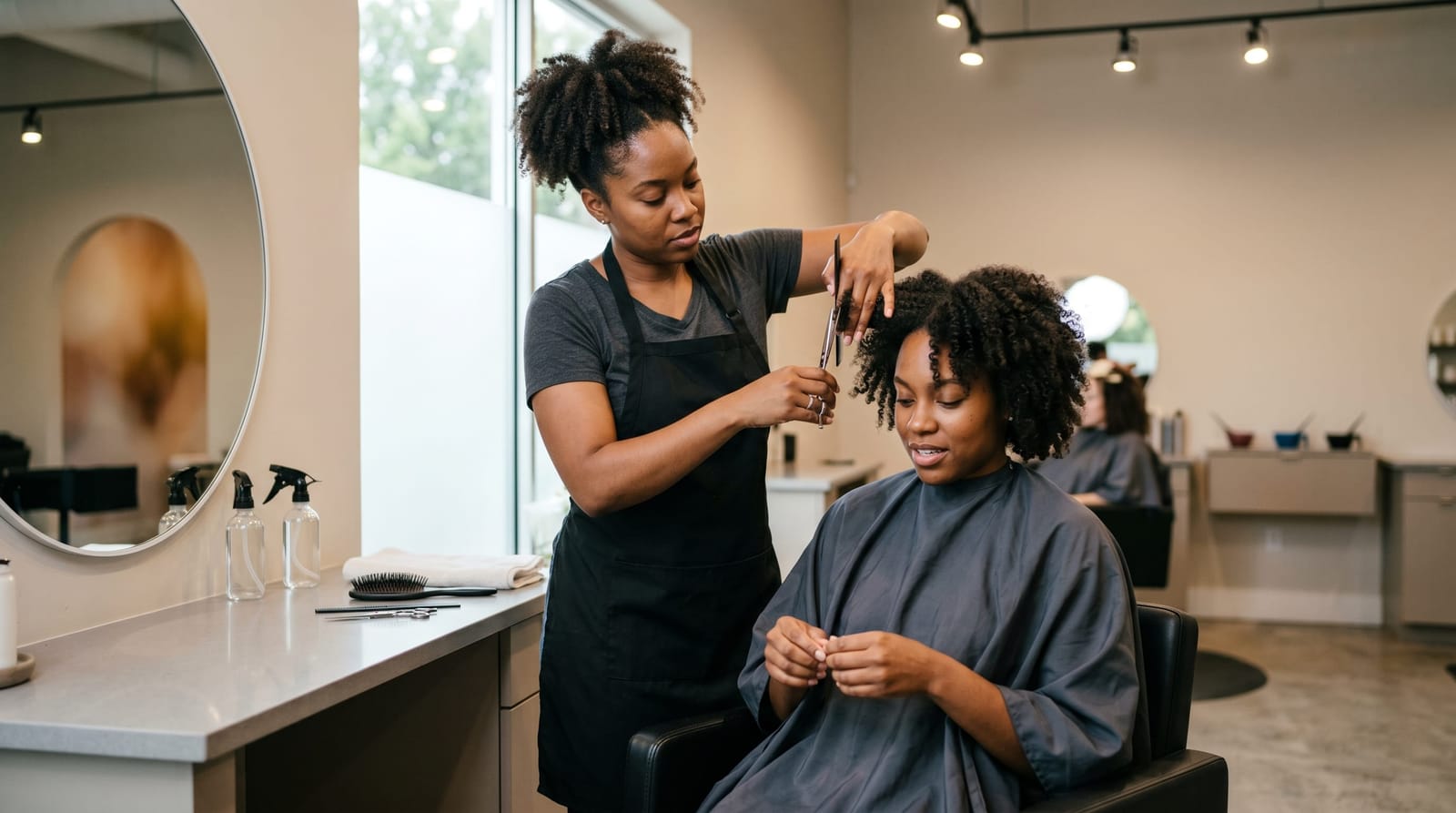
When it comes to haircuts for natural hair, there is no one-size-fits-all approach. Textured and natural hair behaves differently than straight hair: it shrinks, coils, expands, and responds to humidity in ways that demand a stylist who truly understands curl patterns and hair structure. As part of our broader focus on professional women's haircuts, this guide takes a deep dive into the specialized cutting techniques that make the difference between a style that flatters your natural texture and one that fights against it. Whether you are rocking a tight 4C coil, a loose 3A wave, or anything in between, understanding how haircuts for natural hair work will help you communicate your vision to your stylist and walk out of the salon with exactly the result you envisioned.
Why Cutting Natural Hair Requires a Different Skill Set
Straight hair and textured hair do not behave the same way under scissors, or on your head. When a stylist cuts straight hair, what they see wet is largely what the client gets dry. Textured and natural hair, by contrast, can shrink anywhere from 25 percent to 75 percent of its actual length once it dries and coils up. This means a stylist who is not trained in cutting haircuts for natural hair may dramatically misjudge the final shape, leaving a client with something far shorter or uneven than intended.
There are also structural differences to consider. Curly and coily strands are more fragile at the points where they bend, making them prone to breakage if blunt force or dull shears are used. The curl itself can obscure uneven lines, but once the hair is styled or stretched, imbalanced layers and uneven length become very apparent.
This is why Dominican salons with experience in natural hair are a trusted choice for so many clients. The blend of technical cutting skill and deep cultural familiarity with textured hair creates an environment where naturals feel understood rather than managed.
Key Terms Every Natural Hair Client Should Know
- Shrinkage: The reduction in visible length as natural hair dries and contracts into its curl pattern.
- Curl pattern: The shape of each individual strand, ranging from wavy (Type 2) to coily (Type 4).
- Density: How many strands of hair grow per square inch of scalp: this affects how heavy and voluminous the final cut looks.
- Porosity: How well your hair absorbs and retains moisture, which influences how cuts are executed and finished.
The Most Effective Cutting Techniques for Natural Hair
Experienced stylists use a range of haircuts for natural hair techniques depending on the client's curl type, density, and desired style. Understanding these methods helps you ask the right questions during your consultation.
Dry Cutting
Dry cutting is widely preferred for highly textured and coily hair because it allows the stylist to see exactly how the hair sits and moves in its natural state. By cutting the hair dry, the stylist can account for shrinkage in real time and shape the style based on how the curls actually fall, not how they appear when stretched with water weight. This technique is especially useful for haircuts for natural hair like the tapered cut, the shape-up, and the natural afro, where precision silhouette work matters enormously.
The Twist-and-Cut Method
This technique involves sectioning the hair into small twists before cutting the ends. The twist provides uniform tension across each section, allowing the stylist to remove split ends and shape the length evenly. It is a gentle method that minimizes manipulation and works particularly well for clients with type 3B through 4C hair. The twist-and-cut method also preserves curl definition because the hair stays coiled throughout the process rather than being combed out flat.
Search-and-Destroy Trimming
Rather than cutting across sections, search-and-destroy is a strand-by-strand technique where the stylist inspects individual curls for split ends and single-strand knots, then snips only those damaged points. This approach is ideal for clients who are growing out their natural hair and want to retain as much length as possible while still maintaining hair health. It is time-intensive but highly targeted, making it a favorite among length-retention-focused clients.
Texturizing and Layering for Volume Control
Dense, thick natural hair can sometimes feel heavy or lose shape without strategic layering. Stylists use point cutting or razor techniques to remove bulk without sacrificing length, creating movement and helping the hair fall into a more defined shape. For clients seeking haircuts for thick curly hair, this layering approach is often the key to achieving styles that feel light and wearable rather than overwhelming.
Popular Haircuts for Natural Hair and How They Are Shaped
Not every style suits every curl pattern, and part of getting the best haircuts for natural hair is matching the cut to your specific texture. Here are the most sought-after styles and what makes each one work.
The Natural Afro
The afro is one of the most iconic expressions of natural hair. Shaping an afro is about creating a symmetrical, rounded silhouette that frames the face. Stylists use picks and shears to work around the head in sections, blending any uneven areas and defining the perimeter. A well-cut afro should hold its shape as the hair grows out, maintaining the round silhouette without constant restyling.
Tapered and Undercut Styles
Tapered haircuts for natural hair are among the most popular for clients who want a polished, low-maintenance option. The hair is kept shorter at the nape and sides, gradually increasing in length toward the crown. This creates a clean, structured look that highlights the curl pattern at the top while keeping the overall style neat. Tapered cuts work beautifully for type 3 and type 4 hair and can be adapted for pixie-style looks or slightly longer crown shapes.
The Curly Pixie
Short haircuts for natural hair like the curly pixie have surged in popularity because they require minimal manipulation and showcase curl definition beautifully. The key to a great curly pixie is precision at the perimeter, clean lines around the ears and nape, combined with soft, lived-in layers through the top to give the curls room to spring and move. This style is particularly flattering for tighter curl patterns that might get lost in longer lengths.
The Wash-and-Go Cut
Designed to work with the hair's natural movement, wash-and-go cuts are shaped so that the style looks intentional even without heat or extensive styling. The cut is typically layered and slightly rounded to encourage even shrinkage and consistent curl clumping. A client with this type of cut can wash, apply product, and let their hair air dry to a perfectly shaped style every time.
Working With Curl Patterns: Shape Considerations by Hair Type
One of the most important conversations you can have with your stylist before any haircut is about your specific curl pattern and how it affects the final shape of a style. Here is a brief breakdown of common considerations.
Wavy Hair (Type 2)
Wavy hair benefits from light layering to reduce bulk and encourage wave definition. Too much weight will pull the wave flat, so strategic removal of density through the mid-lengths and ends helps waves bounce and move freely. Blunt cuts can make wavy hair look boxy, so subtle graduation is usually preferred.
Curly Hair (Type 3)
Type 3 curls, ranging from loose ringlets to tight spirals, respond well to layered, rounded cuts. Keeping weight in the right places helps define the curl pattern without creating a triangle shape that widens at the bottom. Avoiding too much thinning is important here, as curly hair can frizz when individual strands are cut mid-shaft.
Coily Hair (Type 4)
For type 4 hair, the primary challenges are shrinkage management and maintaining a balanced shape. Because 4C hair in particular shrinks dramatically, cuts need to be planned with the finished shrunken length in mind. Dry cutting is almost always recommended, and the stylist should work with the natural growth pattern of the crown and edges to create a shape that flatters the client's face.
How to Prepare for a Natural Hair Cutting Appointment
Getting the most out of haircuts for natural hair starts before you even sit in the chair. A little preparation goes a long way toward ensuring your stylist can work efficiently and deliver exactly the result you want.
- Come with clean, stretched, or well-defined hair: Depending on the cutting technique, your stylist may ask you to arrive with dry, detangled hair or freshly washed coils. Ask in advance what they prefer.
- Bring photos of styles you love: Inspiration images help bridge the communication gap between what you picture and what your stylist interprets.
- Be honest about your maintenance routine: If you air-dry every day, tell your stylist. Your cut should fit your real life, not an idealized styling routine you will not keep up.
- Ask about products and finishing: The right finishing products applied after your cut can dramatically enhance the final look. Understanding what the stylist used helps you recreate results at home.
If you are also exploring styling options beyond the cut itself, pairing your natural hair cut with techniques like the wash and set hairstyle can extend the life of your style and add a polished finish between appointments.
Related Topics Worth Exploring
If you want to go deeper on specific aspects of natural hair cutting, there are several detailed topics that build on the foundations covered here:
- Clients with thicker curl patterns will find specialized guidance in our post on haircuts for thick curly hair, which covers density management, layering approaches, and style recommendations for voluminous natural hair.
- For those exploring how shape and structure interact with different facial features, our guide on professional women's haircuts provides a strong framework for understanding how to choose a cut that truly flatters your face shape alongside your curl pattern.
- We will also be publishing detailed guidance on styling options and finishing techniques that pair beautifully with natural hair cuts: stay tuned for that resource.
Conclusion
Getting the right haircuts for natural hair is about more than choosing a style you love from a photo: it is about understanding how your curl pattern, density, and porosity all influence the way a cut behaves on your specific hair. The best results come from working with a stylist who is fluent in textured hair, uses the right techniques for your curl type, and takes the time to understand your lifestyle before ever picking up a pair of shears. Whether you are interested in a bold tapered cut, a classic afro shape, or a wash-and-go style built for everyday ease, the right technical approach makes all the difference. Book a consultation at our Dominican salon and let us help you find a cut that works with your natural hair, not against it.