Highlight Maintenance Schedule and Touch-Ups
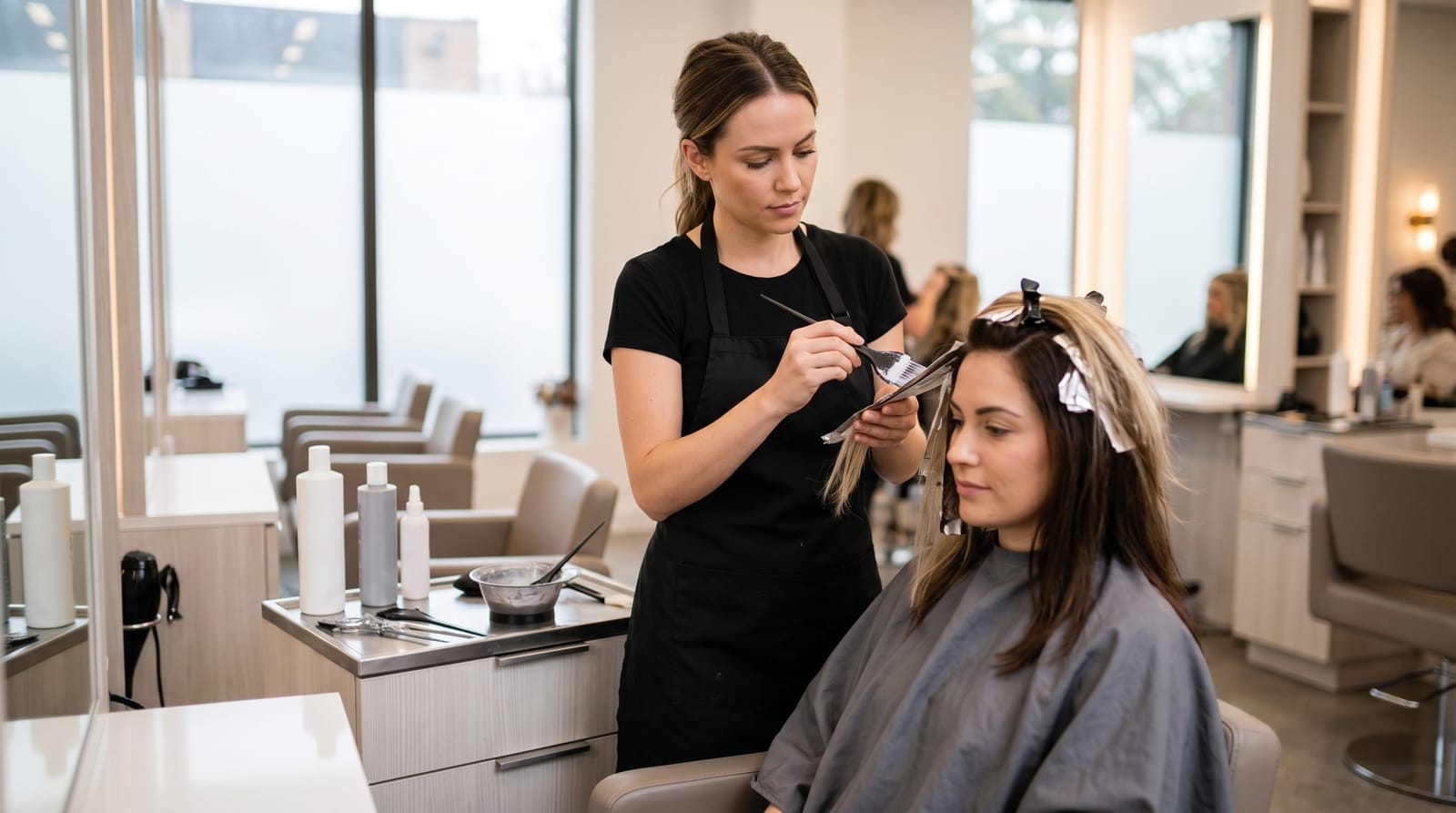
One of the most common questions clients ask after leaving the salon with gorgeous, sun-kissed highlights is: "When do I need to come back?" Getting your highlight touch up timing right is the difference between hair that looks intentionally dimensional and hair that looks grown-out and tired. Whether you've just had a full highlight service or a subtle balayage, understanding your maintenance schedule helps you protect your investment and keep your color looking salon-fresh. This guide breaks down exactly what you need to know.
How Long Do Highlights Actually Last?
The honest answer is that it depends on the technique. Traditional foil highlights, the kind that start at or very near the root, typically need a touch-up every 6 to 8 weeks. Because the lightener is placed close to the scalp, regrowth becomes visible relatively quickly, especially on clients with darker natural hair colors. If you're noticing a sharp line of demarcation where your natural color meets the highlighted sections, that's your signal that highlight touch up timing has arrived.
Balayage and partial highlight techniques offer more flexibility. Because these methods don't start at the root and blend more naturally into the hair, many clients can go 10 to 12 weeks, and sometimes up to three months, between appointments. The soft, diffused grow-out is part of the aesthetic, which means your highlight touch up timing window is much more forgiving.
Your stylist at a professional hair color salon in the DMV area can help you determine which technique fits your lifestyle. If you prefer low-maintenance color that doesn't demand frequent salon visits, a root-to-tip blended approach may be the smarter long-term investment for you.
Reading the Signs: When Your Highlights Need Attention
Rather than relying on a fixed calendar date alone, learn to read what your hair is telling you. Here are the key signs that your highlight touch up timing has come:
- Visible root contrast: A stark line between your natural hair color and highlighted sections, usually most noticeable around the face and part line.
- Dullness or brassiness: Highlights can shift from bright and cool to warm and brassy over time, especially if not protected with toning treatments and proper haircare products.
- Loss of dimension: Highlights that once looked multi-tonal and dynamic start to appear flat or one-dimensional as they grow out and fade.
- Texture changes: Over-processed or unrefreshed highlights can feel drier and more porous at the ends compared to healthier new growth.
One pro tip: schedule your next appointment before you leave the salon. This not only secures your preferred time slot but keeps you on a consistent maintenance cycle so your highlights never fall into a state of obvious neglect.
Types of Highlight Touch-Up Services and What They Address
Not every highlight touch-up is the same, and your stylist will recommend different services based on where you are in your maintenance cycle.
Root Touch-Up with Highlight Refresh
For clients with foil highlights who are 6 to 8 weeks out, a root touch-up targets the new growth specifically. Your stylist will place fresh highlights at the root area to blend seamlessly with the previously highlighted sections. This service is typically faster and more affordable than a full highlight application because less of the hair requires processing.
Partial Highlight Touch-Up
A partial highlight touch-up focuses on the areas that frame your face: the top section, crown, and around the hairline. This is an excellent highlight touch up timing option for clients who want to brighten their look without a full-service appointment. It's also ideal between full sessions to keep the face-framing pieces luminous and fresh-looking.
Toning and Gloss Treatments
Sometimes your highlights don't need re-lifting at all: they just need a tone refresh. A gloss or toning treatment deposits color to neutralize brassiness, deepen dimension, and restore shine. These services can be done as standalone appointments between your regular highlight touch-up visits and are a gentle, low-commitment way to extend the life of your color by several weeks.
Full Highlight Application
If you've waited longer than 12 weeks or are making a significant color change, your stylist may recommend starting fresh with a full highlight application. This is also the appropriate service if you're transitioning from one highlighting technique to another, for example, moving from traditional foils to a balayage for a softer grow-out.
How to Extend Your Highlight Touch Up Timing Between Appointments
Proper at-home care can meaningfully push your highlight touch up timing further without sacrificing the quality of your color. Here's what actually works:
- Use sulfate-free shampoo: Sulfates strip color molecules and accelerate fading. Switching to a color-safe, sulfate-free formula significantly extends the life of your highlights.
- Wash less frequently: Over-washing is one of the fastest ways to fade highlighted hair. Aim for two to three washes per week and use dry shampoo on off days.
- Apply a toning shampoo weekly: Purple or blue toning shampoos neutralize brassiness on blonde and light brown highlights. Use once a week in place of your regular shampoo.
- Protect from heat and UV exposure: Heat styling and sun exposure both degrade color and can cause brassiness. Use heat protectant spray before styling and wear a hat or UV-protective hair product when spending time outdoors.
- Deep condition regularly: Highlighted hair is more porous and prone to dryness. A weekly deep conditioning treatment or hair mask keeps strands nourished and helps color last longer.
It's also worth noting that if you have chemically treated hair, such as a relaxer, your highlight touch up timing and at-home care routine may need to be adjusted. Understanding highlights on relaxed hair and how these two chemical processes interact is essential for keeping both treatments safe and effective.
Building a Seasonal Color Maintenance Plan
Many clients find it helpful to think about their highlights in seasonal cycles rather than just counting weeks. This approach makes highlight touch up timing feel more intuitive and allows your stylist to plan services that complement each season's light and your natural hair's behavior.
For example, many clients go brighter and lighter in spring and summer, scheduling full or partial highlights every 6 to 8 weeks. In fall and winter, they may shift to deeper, richer tones with glossing treatments every 8 to 10 weeks instead. This seasonal approach keeps your color looking intentional year-round while preventing over-processing.
Talk to your colorist about designing a color calendar that maps out your highlight touch up timing across all four seasons. A good colorist won't just think about today's appointment: they'll think about where your hair needs to be six months from now.
Frequently Asked Questions
How often should I get highlight touch-ups?
Most clients with traditional foil highlights benefit from a touch-up every 6 to 8 weeks. If you have balayage or partial highlights, your highlight touch up timing can stretch to 10 to 12 weeks or even three months, depending on how much root contrast you're comfortable with.
Can I do highlight touch-ups at home between salon visits?
At-home highlight kits exist, but they carry significant risk: particularly if you have color-treated, relaxed, or previously processed hair. For root touch-ups, box color can work in a pinch for all-over color, but highlights require a level of placement precision and product knowledge best left to a professional stylist. Toning shampoos and glossing treatments are safer at-home alternatives that keep highlights looking fresh without the risk.
Why do my highlights look brassy so quickly?
Brassiness happens when the warm underlying pigment in your hair is exposed or when cool tones fade from your highlights. It can be caused by frequent washing with harsh shampoos, heat styling without protection, sun exposure, and mineral buildup from hard water. Toning treatments at the salon and purple shampoo at home are your best tools to keep brassiness at bay between highlight touch up timing appointments.
Is it bad to wait too long between highlight touch-ups?
Waiting significantly longer than your recommended maintenance window isn't necessarily damaging in itself, but it can make the correction process more complex and costly. A large amount of new growth means more product, more time, and more potential for uneven results. If highlight touch up timing slips beyond 14 to 16 weeks, discuss a transition plan with your stylist before proceeding.
Conclusion
Getting your highlight touch up timing right is one of the simplest ways to protect the health of your hair and the quality of your color investment. Whether you're on a 6-week foil schedule or a 12-week balayage rotation, staying consistent with maintenance appointments and following a solid at-home care routine keeps your highlights looking dimensional, vibrant, and intentional. Your colorist is your best resource for building a personalized maintenance plan, and as part of a broader professional hair color and highlighting services experience, smart scheduling is what keeps great color looking great long after you leave the chair.