Blow Out for Braids: Specialized Technique and Benefits
When exploring professional blow out services, most people think of a single process applied to loose natural hair. But a blow out for braids is its own specialized service: one that requires a different approach, specific tools, and a trained hand. Whether you're prepping your hair before a fresh install or restoring your strands after weeks in a protective style, this technique plays a critical role in hair health and final results. In this guide, we break down exactly how a blow out for braids works, why it differs from a standard blow out, what your hair needs before and after braiding, and what benefits you can expect when this service is done correctly at a Dominican salon.
What Is a Blow Out for Braids and Why It's Different
A standard blow out focuses on creating a polished, smooth finish on loose hair. A blow out for braids serves a different purpose entirely. It's used in two specific scenarios: preparing natural hair before a braid installation, or restoring and detangling hair immediately after braids are removed.
In the pre-braid scenario, the goal is to elongate the hair. Natural hair in its shrunken state can lose up to 75% of its actual length due to curl shrinkage. When braiders work with shrunken hair, the install takes longer, causes more tension, and often results in uneven sections. A proper blow out for braids stretches each strand to its full length without permanently altering its texture, making the braiding process smoother and less stressful on the scalp.
In the post-braid scenario, the blow out targets buildup, matting, and tangles that accumulate after 6 to 8 weeks in a protective style. This version of the service combines deep cleansing, moisture restoration, and careful heat application to return the hair to a workable state.
Key Differences From a Traditional Blow Out
- Lower heat settings are used, typically between 300°F and 350°F, to protect hair that may be fragile or dry
- More emphasis is placed on detangling in sections before heat is applied
- Tension techniques replace heavy product layering to avoid weighing strands down
- The end goal is elongation and softness, not necessarily a sleek, bone-straight finish
Understanding this distinction helps clients set the right expectations and helps stylists deliver results that actually support the hair's next phase of styling.
Hair Preparation: The Steps That Make or Break the Result
Preparation is where most at-home attempts at a blow out for braids fall short. Skipping even one step can lead to heat damage, excessive breakage, or a finish that doesn't last through the braid install. In a professional Dominican salon setting, preparation follows a specific sequence that has been refined over decades of working with all natural hair textures.
Step 1: Clarifying Shampoo
Before anything else, the hair needs a thorough cleanse. After weeks in braids, product residue, scalp oils, and environmental buildup collect at the roots and along each strand. A clarifying shampoo removes this buildup completely. Studies on scalp health suggest that sebum and product residue accumulation increases significantly after just 4 weeks of protective styling, which is why this step cannot be replaced with a regular moisturizing shampoo alone.
Step 2: Deep Conditioning Treatment
Post-clarifying, the hair is stripped of moisture. A deep conditioning treatment, left on for a minimum of 20 to 30 minutes, restores elasticity. Hair with good elasticity stretches under heat without snapping. Hair without it breaks. This is non-negotiable for a safe blow out for braids.
Step 3: Detangling in Sections
The hair is divided into 4 to 6 sections depending on density. Each section is finger-detangled first, then worked through with a wide-tooth comb from ends to roots. Rushing this step is responsible for a large percentage of breakage complaints after blow out services.
Step 4: Heat Protectant Application
A lightweight, heat-activated protectant is applied to each section. Heavy creams or butters are avoided here because they can cause steam damage under high heat: trapping moisture against the hair shaft rather than protecting it.
The Blow Out Technique Itself: Section by Section
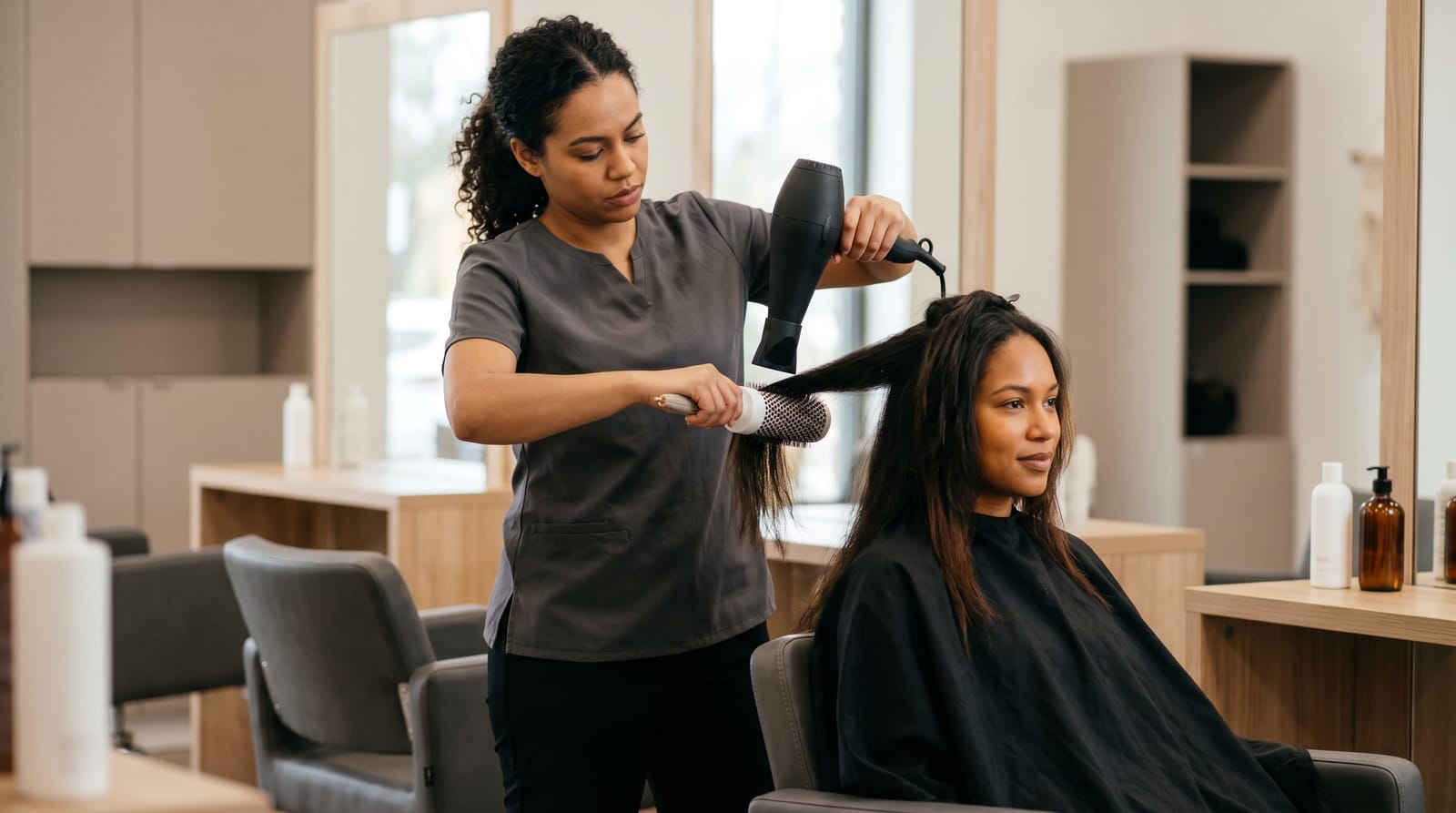
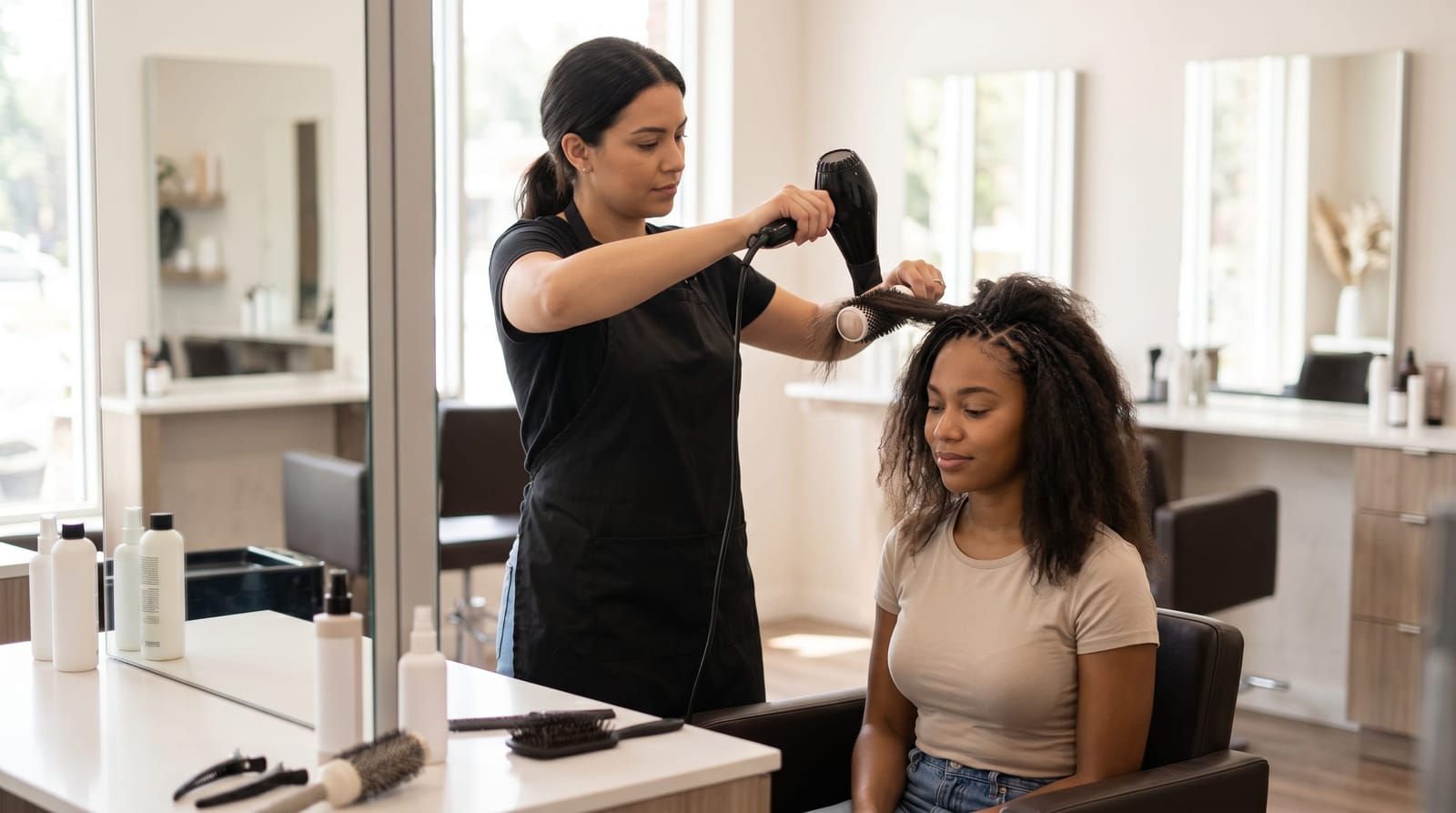
The actual blow out process for braids uses a combination of a professional-grade blow dryer and a round or paddle brush, depending on the desired level of stretch. Dominican stylists are known for their tension-based blow drying method, which creates elongation through controlled pulling rather than excessive heat exposure.
Each section is worked on individually. The stylist holds the section taut at the root while directing airflow downward along the hair shaft. This technique, sometimes called the "chase method," moves the dryer and brush simultaneously in one downward motion. It reduces frizz by sealing the cuticle and creates the smooth elongated result that makes braiding significantly easier.
Heat Settings for Different Hair Types
- Fine or color-treated natural hair: 250°F to 300°F, low airflow speed
- Medium density natural hair (4A/4B): 300°F to 350°F, medium airflow
- Thick, coarse, or 4C hair: 350°F to 380°F maximum, high airflow with consistent motion
A full blow out for braids on medium-density hair typically takes between 45 minutes and 90 minutes. Thicker hair or hair that hasn't been properly detangled may take longer. Rushing this service by using excessively high heat to cut time is one of the most common causes of heat damage at lower-quality salons.
If you're curious about how this process compares to a full styling blow out experience, the wash and blow out near me service at a Dominican salon follows a similar philosophy but with a focus on finished styling rather than preparation for a protective install.
Benefits of Getting a Professional Blow Out Before Braids
Clients who invest in a professional blow out for braids before their install consistently report better outcomes across several areas. These aren't minor cosmetic differences: they affect the longevity of the style, the health of the scalp, and the overall braiding experience.
1. Longer-Lasting Braids
When braids are installed on stretched, clean hair, each section is even and consistent. Uneven sections caused by shrunken hair lead to loose braids that unravel faster. Clients who prep with a blow out typically get 2 to 3 additional weeks of wear from the same braid style.
2. Reduced Scalp Tension
Braiding tightly coiled, shrunken hair requires more force to pull and section, which places significant stress on the follicle. A blow out reduces this tension during installation. Reduced tension means less scalp pain immediately after braiding and a lower risk of traction alopecia over time: a condition affecting an estimated 1 in 3 women who regularly wear tight protective styles.
3. Neater Finished Appearance
Stretched hair lays more uniformly at the roots. This results in cleaner parts, less frizz at the base, and a more polished look from day one of wearing the style.
4. Easier Detangling at Removal
Hair that was blown out and properly moisturized before braiding tends to have fewer tangles upon removal. This dramatically reduces breakage during the takedown process.
What to Expect After a Blow Out When Removing Braids
Post-braid removal is one of the most delicate moments in a natural hair care routine. After 6 to 8 weeks of protective styling, the hair has shed naturally but those shed hairs have nowhere to go: they become trapped within the braid, creating what looks like massive tangling or matting at the roots.
A blow out for braids performed after removal helps address this safely. The process follows the same preparation steps, clarify, deep condition, section, protect, but the detangling phase requires even more patience. Dry detangling before washing is recommended by most professional stylists to avoid worsening tangles under running water.
Many clients wonder whether it's safe to apply heat immediately after removing braids, especially if the hair has been in a style for a full 2 months. For a detailed answer on timing, products, and what signs to look for before proceeding with heat, the information on blow out after braid removal covers this transition in full.
Common Mistakes to Avoid With a Blow Out for Braids
Even clients who have been managing natural hair for years make mistakes that compromise their blow out for braids results. Knowing what to avoid is just as valuable as knowing the correct technique.
- Skipping the deep conditioning step: Dry hair + heat = breakage. This is not negotiable regardless of how much time you're trying to save.
- Using too much product: Heavy butters or thick creams cause steam buildup under high heat, which can actually weaken the hair shaft rather than protect it.
- Blow drying soaking wet hair: Always towel dry and air dry to about 70% before applying heat. Starting on soaking wet hair requires higher heat for longer: increasing damage risk significantly.
- Blow drying without sections: Working on large, unsectioned pieces leads to uneven results and forces the stylist to go over the same areas multiple times.
- Waiting too long after braid removal: The longer shed hair sits matted in the braid, the harder it becomes to remove without breakage. Aim to address post-braid hair within 48 hours of removal.
Professionals who specialize in Dominican blow out techniques have worked with all of these scenarios. Their experience with diverse natural hair textures, particularly 4A through 4C hair types, is what separates a skilled Dominican stylist from a generalist blow dry bar.
Related Topics Worth Exploring
If you're building a complete hair care routine around protective styling and blow out services, several related topics connect directly to what we've covered here. Understanding the full Dominican blow out experience, including what happens during the wash, the treatment process, and the tools used, provides important context for why these services deliver such consistent results. The difference between a Dominican blow out and a standard salon blow out also matters when you're deciding where to book your next appointment, and that comparison covers the specific techniques, products, and cultural expertise that set Dominican stylists apart.
For clients who regularly cycle between protective styles and blow outs, knowing how to maintain the results between salon visits is equally important. Blow out maintenance and longevity tips address exactly that: how to protect your blow out, when to refresh it, and how to extend the life of the style whether you're wearing it loose or heading into a braid install.
Final Thoughts
A blow out for braids is not a luxury add-on: it's a functional service that protects your hair, improves your braid install, and sets the foundation for a healthier protective styling cycle. Done correctly by a skilled professional, it reduces breakage, minimizes scalp tension, and extends the life of your style by weeks. Done incorrectly or skipped entirely, it leaves your hair vulnerable at every stage of the process. If you're serious about maintaining healthy natural hair through protective styling, this service belongs in your routine. Book a consultation at a professional Dominican blow out salon to assess your hair's current condition and determine the right approach for your next install.